Jersey Fabric Guide
A Detailed Guide to jersey fabric – Features and Care
What is jersey fabric?
Jersey fabric, a mainstay in the textile industry, is renowned for its versatility, comfort, and stretchiness. Originating from the Channel Islands, jersey fabric has evolved significantly over time. This guide delves into its rich history, diverse uses, care instructions, and how it compares with other fabrics.
History of Jersey Fabric
Jersey fabric’s journey began in the Channel Islands, particularly on the island of Jersey. Initially used in medieval times for making fishermen’s sweaters and underwear, jersey knit gained popularity throughout Western Europe during the Renaissance and Enlightenment periods. Coco Chanel’s introduction of jersey in high fashion in the early 20th century further elevated its status. Today, jersey is a staple in casual and athletic wear, and is also used in bedding due to its softness.
Jersey Fabric Production
Jersey fabric can be made from cotton, wool, or synthetic fibers. The production process involves knitting, where yarn is looped into a lattice structure, creating a fabric that is soft and stretchy. While some jersey fabrics are dyed before knitting, others are dyed after the fabric is produced. Fire retardants and other treatments might be applied to enhance the fabric’s properties.
Types of Jersey Fabric
- Single Jersey: Lightweight, with one flat and one piled side.
- Interlock Jersey: Double-layered, insulative, and durable.
- Jacquard Jersey: Features complex patterns.
- Clocqué Jersey: Has a puckered, raised pattern.
- Stretch Jersey: Combines jersey material with elastic fibers.
- Slub Jersey: Textured pattern from irregular yarn.
The Pros and Cons of Jersey Fabric
Pros
- Versatility: Jersey fabric is used in a wide range of products, from casual wear to high fashion, and even in home textiles like bedding.
- Comfort: Known for its softness, jersey fabric is comfortable to wear, making it ideal for everyday garments.
- Stretchability: Its knit structure gives jersey fabric a natural stretch, offering flexibility and ease of movement.
- Durability: Jersey is generally durable, holding up well through regular wear and washing.
- Easy Maintenance: Most jersey fabrics are machine washable and dryable, and they are resistant to wrinkles, reducing the need for ironing.
- Breathability: Natural fiber jerseys, like cotton, are breathable, making them comfortable in various weather conditions.
- Eco-Friendly Options: Natural jerseys, especially organic cotton and wool, offer environmentally sustainable options.
Cons
- Pilling: Jersey can be prone to pilling, where small balls of fiber form on the surface due to abrasion.
- Sewing Challenges: The stretchy nature of jersey can make it difficult to sew, especially for beginners.
- Shape Retention: Some jersey fabrics, especially those made from synthetic fibers, may not retain their shape as well over time.
- Environmental Concerns: The production of synthetic jerseys involves chemicals and can release microfibers, contributing to pollution.
- Water Consumption: Cotton jersey production can be water-intensive, raising sustainability concerns.
- Cost Variability: The price of jersey fabric can vary significantly based on the quality and type of material used.
Understanding these pros and cons is crucial for anyone working with jersey fabric, whether for fashion design, home décor, or other creative projects. By considering these factors, you can make informed choices about the use of jersey fabric in your work.
Uses of Jersey Fabric
Jersey fabric is primarily used in apparel like T-shirts, underwear, and athletic wear. Its softness makes it ideal for bedding, including bed sheets and pillowcases. Its flexibility and comfort have made it a favorite for sleepwear, casual and athleisure wear.
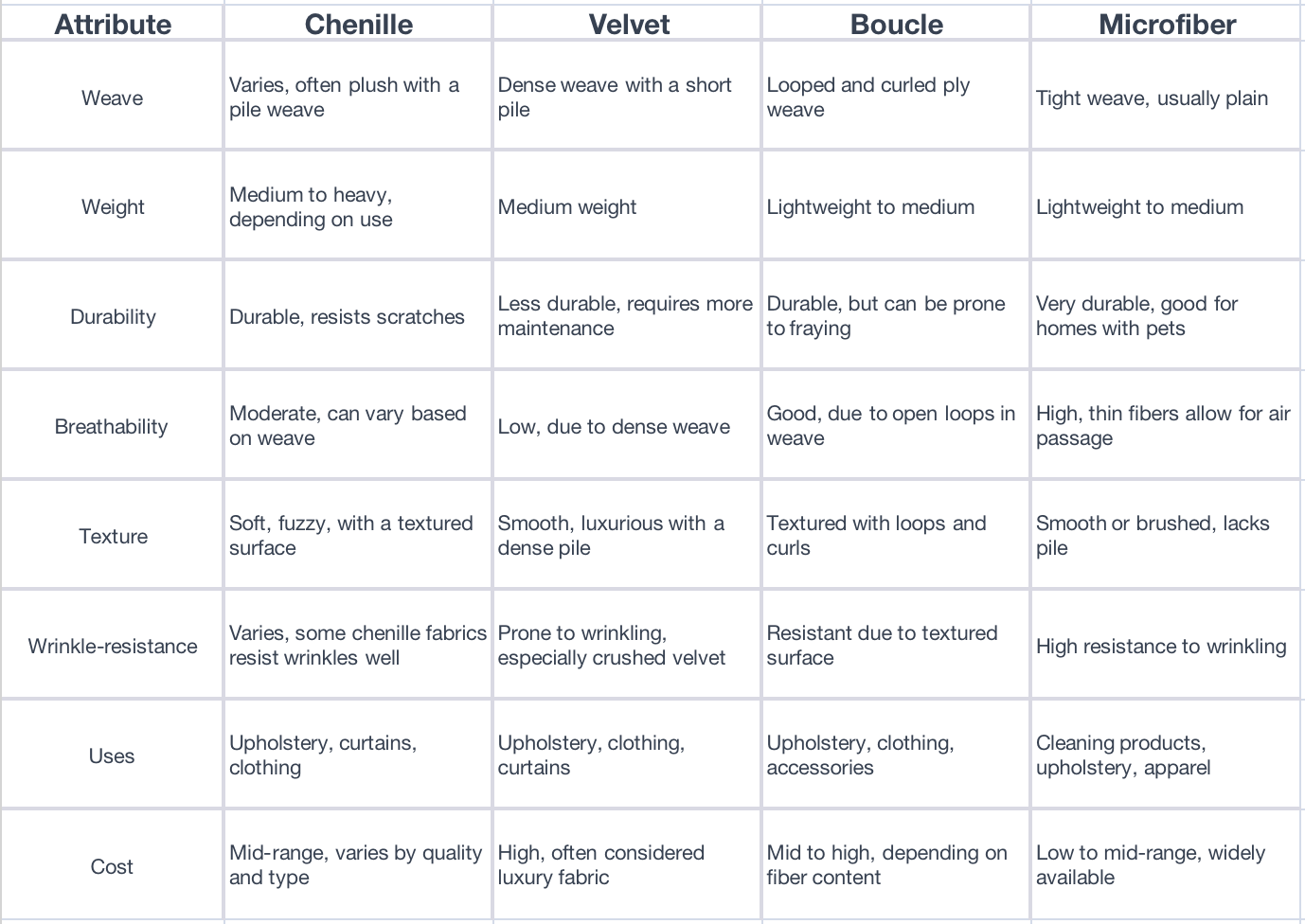
- Texture and Feel: Velvet has a short, dense pile, creating a smooth and luxurious surface. It absorbs light and appears denser compared to chenille, which has a fuzzy, textured surface with closed loops.
- Durability: Chenille is more scratch-resistant and durable than velvet. Velvet requires more maintenance to keep in good condition, while chenille is more robust and suitable for regular use.
- Appearance and Maintenance: Velvet offers a luxurious and elegant look with rich colors and patterns but is more demanding in terms of maintenance. Chenille, while also luxurious, is easier to maintain and more affordable.
Care Instructions for Jersey Fabric
- Washing: Machine washable in cold water.
- Drying: Tumble dry on a low setting or air dry.
- Ironing: Use a low heat setting, if necessary.
- Storing: Fold to prevent stretching or distortion.
Environmental Impact
Jersey fabric’s environmental impact varies with the fibers used. Synthetic fibers like polyester and rayon have a negative environmental impact, while natural fibers like cotton and wool are more sustainable. Wool, being biodegradable and free from agrochemicals, is considered the most environmentally friendly material for jersey fabric.
Comparison with Other Fabrics
Comparing jersey fabric to woven fabrics like cotton, the key difference lies in the construction. Jersey, being a knit, is stretchy and offers more give, making it ideal for garments that require movement. Woven fabrics, on the other hand, are more rigid and don’t stretch, making them suitable for structured garments.
The Future of Jersey Fabrics
While the popularity of jersey fabric continues, there is a growing concern over the sustainability of cotton production, given its high water usage. Alternatives like bamboo and hemp jersey fabrics are being explored for their environmental benefits.
Jersey fabric, with its rich history and versatile nature, remains a favorite in the textile industry. Its adaptability, comfort, and ease of care make it suitable for a wide range of applications. As we move towards more sustainable practices, the evolution of jersey fabric continues, promising to maintain its relevance in the world of textiles.
FAQ
What is jersey vs cotton?
- Jersey refers to a type of knit fabric that can be made from various materials including cotton, wool, or synthetic fibers. It is characterized by its stretchiness and softness. Jersey fabric can be made from 100% cotton or a blend of cotton and other fibers.
- Cotton, on the other hand, is a natural fiber and a common material used to make a variety of fabrics, including jersey. Cotton fabric can be either knit or woven, whereas jersey specifically refers to a knit fabric. So, cotton jersey is a type of jersey fabric made from cotton fibers.
Is jersey fabric good for summer?
Yes, jersey fabric can be good for summer, especially when made from natural fibers like cotton. Cotton jersey is breathable and absorbs moisture, which helps in keeping the body cool and comfortable in warm weather. Lightweight jersey fabrics are particularly suitable for summer clothing due to their airflow and moisture-wicking properties.
Is jersey a winter fabric?
Jersey can be used for winter clothing, especially when made from wool or a heavier blend of materials. Wool jersey, for instance, is warm and retains heat, making it a good choice for colder weather. The knit structure of jersey also allows for trapping air, which helps in insulation. However, the suitability of jersey for winter largely depends on the type of fiber used and the weight of the fabric.
Is jersey 100% cotton?
Jersey can be 100% cotton, but it’s not always the case. Jersey refers to the knit style of the fabric rather than its material composition. Jersey fabric can be made entirely from cotton, which is soft and breathable, or it can be a blend of cotton with synthetic fibers like polyester or natural fibers like wool. Blends are often used to incorporate different characteristics such as increased stretch or durability.